
Balancing Openness and Protection Across the Modern Campus
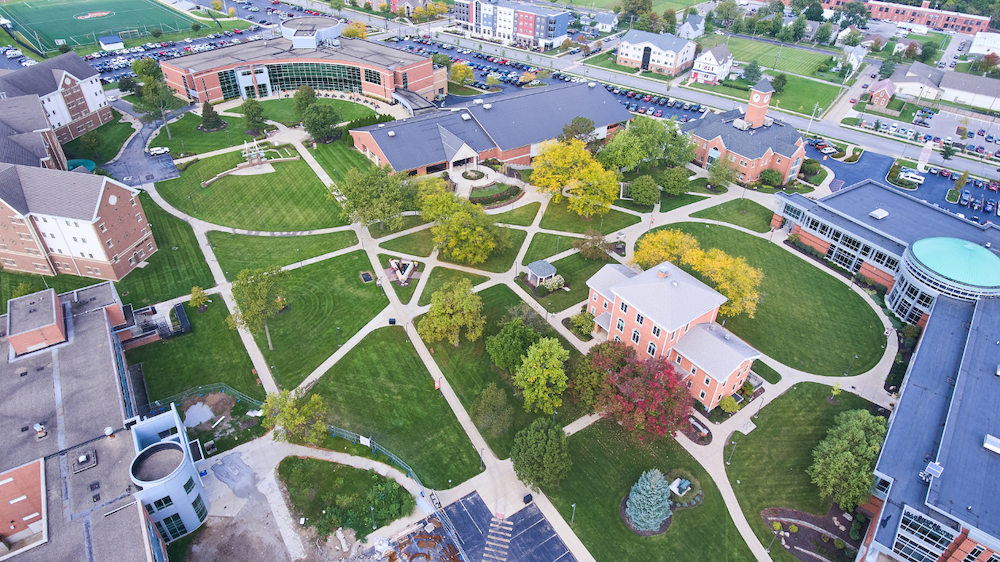
Whether it is a bustling university, a sprawling hospital, or a corporate headquarters, a campus is rarely a single environment. It is a security jigsaw puzzle, a collection of distinct zones, each with its own risk profile.
The challenge for facility managers is creating a cohesive security mosaic that protects people without making them feel like they are in a fortress. The key to a safe campus lies in understanding the nuance of these different zones.
The Public Face: Creating a Safe Welcome
The perimeter and common areas, like a hospital lobby or a college quad, are designed for high traffic and accessibility. Here, security must be visible but non-intrusive.
- The Strategy: This is where AI-driven surveillance shines. Instead of hovering guards, smart cameras with behavioral analytics can identify anomalies, like a bag left unattended or a vehicle parked in a restricted fire lane, triggering a response only when necessary. It maintains the open campus feel while providing a digital safety net.
The Private Core: Managing the Keycard Chaos
Move deeper into the campus, and you hit the residential or private office zones. Here, the priority shifts to high-volume, authorized access.
- The Strategy: This is where cloud-based access control becomes a game-changer. Traditional keycards are easily shared or lost, compromising the integrity of a dormitory or an executive suite. Transitioning to mobile credentials allows for geo-fenced access, ensuring that a student or employee’s “key” only works when they are physically at the door, and can be revoked instantly if their status changes.
The High-Value Perimeter
Every campus has High-Value Zones, the pharmacy in a hospital, the server room in a corporate office, or the research lab on a campus. These areas require an entirely different layer of security.
- The Strategy: For these zones, we look toward multi-factor authentication and integrated fire safety. In these environments, the purpose of fire suppression is asset protection. Specialized smoke detection (like VESDA) can catch a fire before there is even a visible flame, protecting millions of dollars in equipment or research.
As you walk your campus today, ask if your security is proportional. Are you over-securing the lobby and under-securing the lab? Is your fire system as smart as your cameras?
A truly secure campus has systems tailored to the specific puzzle pieces of the environment. If you’re ready to see how your different zones can work together, let’s start a conversation.